
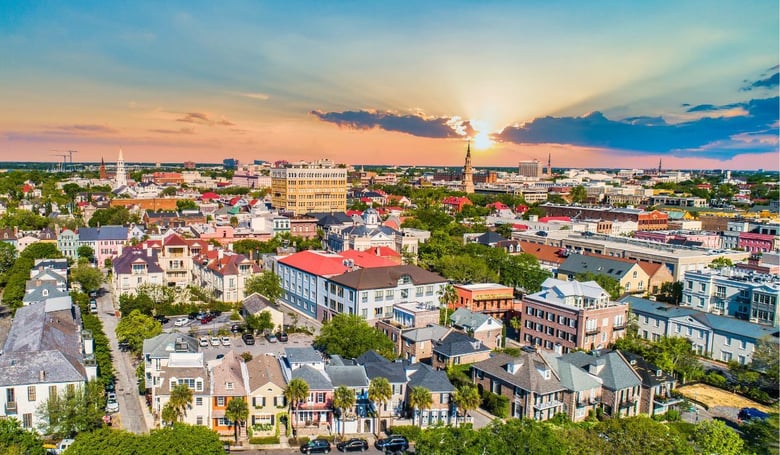
Charleston is not a city that offers one version of the good life. It offers many.
In a single region, you can build steps from a cobblestone historic street, on a bluff above a tidal river, on a barrier island lapped by the Atlantic, or deep within a landscape of Spanish moss and ancient oaks where the only sounds are the wind and the marsh.
Each setting has its own rhythm, its own character, and its own version of what home feels like.
For those building a custom home, that variety is one of Charleston’s greatest gifts and greatest complexities. There is no single “best” neighborhood in Charleston. There is only the neighborhood that is right for you, for how you want to live, and for the home you ultimately want to create.
At Cook Bonner Ebeling, we’ve spent 50 years helping clients navigate exactly this decision. What we’ve found is that the right location is never chosen in isolation. It’s chosen in alignment with a vision, and that process begins long before any land is purchased.
What to Consider Before You Choose a Neighborhood
The most common mistake we see? Falling in love with a lot before understanding what can be built on it.
Things like zoning restrictions, floodplain designations, setback requirements, architectural review boards, and elevation mandates aren’t afterthoughts. They’re the variables that determine whether your vision is achievable on any given piece of land.
Choosing a neighborhood first, and a builder second, often leads to hard conversations after the fact. When our team evaluates a property with a client, we look at five interconnected factors:
Lifestyle Priorities
What does your daily life look like in this home? Walkable streets and cultural venues? Morning runs on the beach? A private dock and a boat? A landscape that feels like the rest of the world has gone quiet?
The neighborhood should support how you actually live, not just what looks appealing on a map.
Lot Availability and Characteristics
Some areas require purchasing a teardown or infill lot, which carries its own timeline and cost considerations. Others offer larger parcels with room for expansive outdoor living, guest structures, or a pool that flows naturally into the landscape. The lot itself shapes the home.
Regulatory Environment
Historic districts, HOA design guidelines, and coastal construction standards vary significantly across Charleston’s neighborhoods.
For example, what’s possible on Sullivan’s Island is governed by a very different set of rules than what is possible on Johns Island. Understanding these requirements early prevents expensive surprises later.
Total Budget Alignment
The purchase price of a lot is only one number. Site preparation, elevation requirements, permitting complexity, and construction considerations all affect the total investment. A waterfront lot may be compelling on paper, but demand considerably more from a construction standpoint.
Long-Term Value
A well-chosen neighborhood doesn’t just support how you live today. It protects the investment you are making for decades to come.
With those factors in mind, here’s an honest look at the areas where Cook Bonner Ebeling most frequently builds and what makes each one worth understanding.
Downtown Charleston (The Peninsula)
The Experience
There’s no place quite like it. The Peninsula is one of the most architecturally preserved urban environments in America, and building here means becoming part of a living, walkable history.
Cobblestone streets, antebellum homes, waterfront parks, James Beard–recognized restaurants, and the Battery are all within reach of daily life.
What to Know Before You Build
Projects in the historic district require coordination with the Board of Architectural Review. Design decisions, including materials, massing, fenestration, and colors, are evaluated against preservation standards that have shaped Charleston’s streetscape for generations.
Most opportunities involve either teardown parcels or significant renovations of existing structures. Timelines and budgets reflect that level of care and oversight.
Best Suited For
Downtown Charleston is best suited for buyers who value architecture, culture, and walkability above all else. This is often a strong fit for buyers drawn to legacy-style homes with historic character.
James Island
The Experience
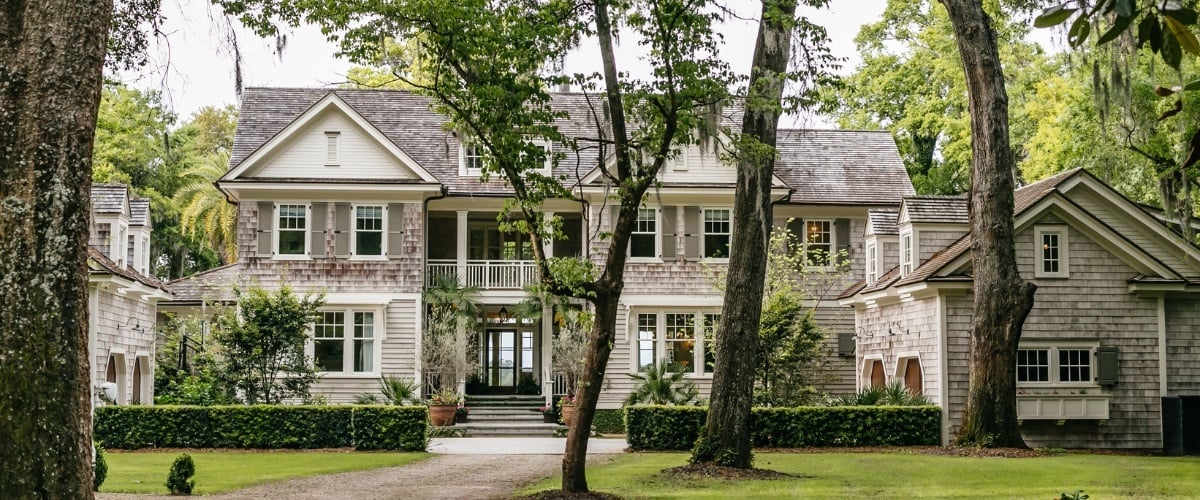
Life on James Island moves at a comfortable pace. Tucked between downtown Charleston and Folly Beach, the area offers a unique blend of coastal charm, mature landscapes, and everyday convenience.
Residents enjoy easy access to waterfront recreation, local dining favorites, county parks, and some of the Lowcountry’s most scenic views.
What to Know Before You Build
From established neighborhoods to marsh-front and waterfront homesites, James Island offers a wide variety of building opportunities.
Site conditions can vary significantly depending on location, with considerations such as flood zones, lot elevation, tree preservation requirements, and waterfront regulations often influencing design and construction decisions. Evaluating these factors early helps ensure your vision aligns with the realities of the property.
Best Suited For
Homeowners who want to stay connected to Charleston’s vibrant culture while enjoying a more relaxed coastal setting often find James Island to be an ideal fit.
The area appeals to families, professionals, and retirees alike, offering a balance of privacy, convenience, outdoor recreation, and access to both downtown Charleston and Folly Beach.
Mount Pleasant
The Experience
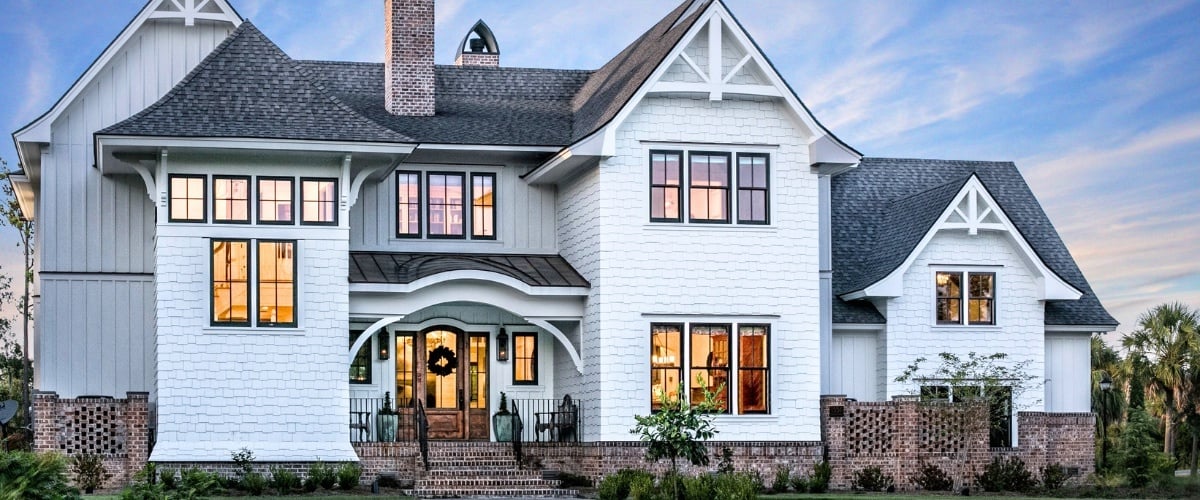
Mount Pleasant has long been one of the most established residential areas in the region and a community where coastal access, strong schools, and neighborhood life coexist comfortably.
The town has expanded significantly over the past two decades, and that growth has brought a range of communities, from waterfront neighborhoods along the Wando and Shem Creek to more inland areas that offer value and convenience.
What to Know Before You Build
Competition for quality lots is high, and many established neighborhoods carry HOA or design guidelines that influence architectural direction. Site selection is critical here: not all lots carry the same build potential, and early evaluation is essential.
Best Suited For
Mount Pleasant is best suited for families seeking a balance between convenience and coastal living. It’s often a natural fit for those seeking easy access to strong schools, local marinas, and Downtown Charleston.
Isle of Palms (IOP)
The Experience
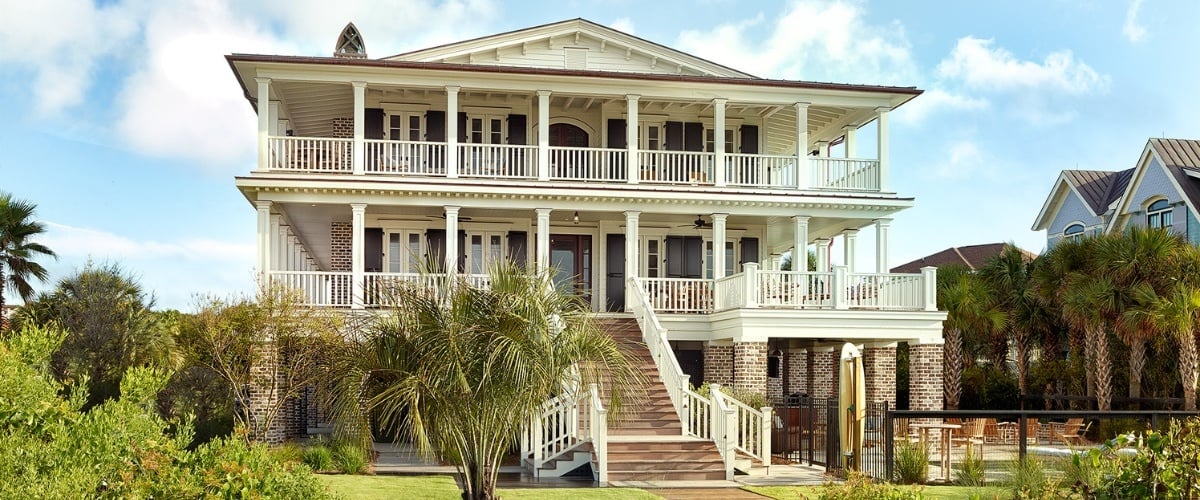
Isle of Palms is defined by the Atlantic. Homes here are oriented around ocean views, salt air, and the kind of indoor-outdoor living that the coast demands. It’s a place where the pace of life follows the tide, and the design of the home follows that pace.
What to Know Before You Build
Coastal construction regulations are among the most comprehensive in South Carolina. Elevation requirements, FEMA floodplain designations, and storm-resilience standards all shape what’s possible and what it costs to build it.
Land values reflect both the desirability of the location and the scarcity of available parcels.
Best Suited For
Isle of Palms is best suited for buyers who want the ocean as part of their everyday lifestyle. It’s especially appealing for those seeking the relaxed rhythm of the coast while having easy access to outdoor living.
Sullivan’s Island

The Experience
Sullivan’s Island offers something increasingly rare: a quieter, more residential version of coastal living. It’s understated by design. There are no commercial strips, no resort hotels, and no crowds.
What exists is a tightly knit residential community with exceptional natural beauty and some of the most sought-after real estate in South Carolina.
What to Know Before You Build
Building opportunities are extremely limited, and Sullivan’s Island carries some of the most restrictive zoning in the Charleston area. Every project requires careful navigation of design and permitting standards.
This is not a neighborhood where you build quickly. It’s one where you build intentionally.
Best Suited For
Sullivan’s Island is best suited for buyers seeking discretion, privacy, and a slower coastal pace. It appeals to those who value understated luxury over visibility.
Daniel Island
The Experience
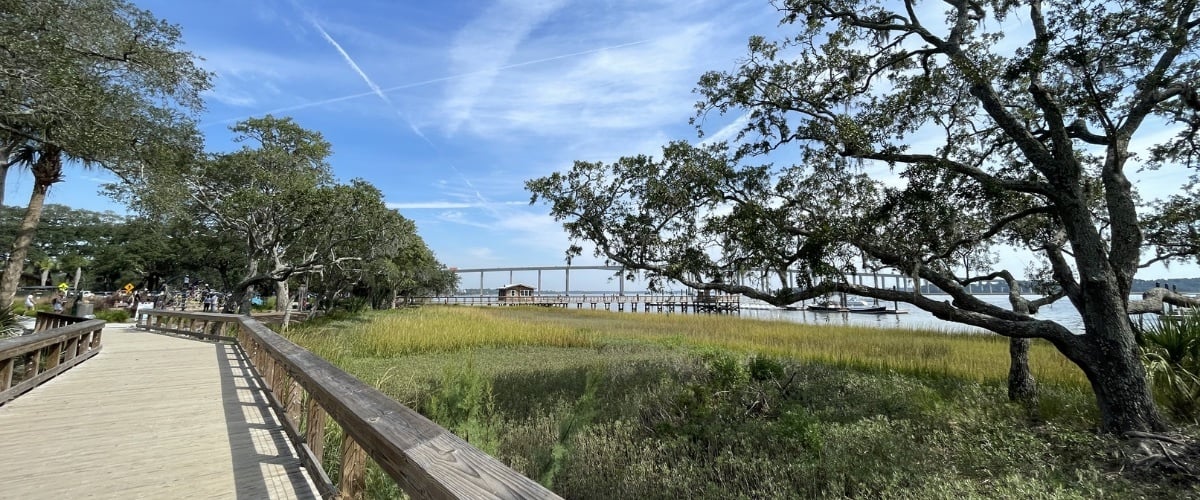
Daniel Island represents a more modern interpretation of Lowcountry living. As a master-planned community, it brings together residential neighborhoods, waterfront access, golf, dining, and walkable amenities in a way that feels cohesive and intentional.
It’s polished, well-organized, and highly livable, providing a community where everything seems to have been considered.
What to Know Before You Build
Daniel Island’s design guidelines are what preserve its character and shape what can be built within it.
HOA and architectural review processes maintain consistency throughout the community, which means certain design directions, materials, and architectural expressions may require adaptation. The tradeoff is a neighborhood that holds its standard well over time.
Best Suited For
Daniel Island is best suited for professionals and families who prefer a cohesive, well-organized environment. It’s especially appealing for those looking for a more polished community feel.
Johns Island

The Experience
Johns Island offers something the other areas simply cannot: space. With larger parcels, deeper setbacks from the road, and a stronger connection to the Lowcountry’s natural landscape, it’s the part of greater Charleston where a custom home can truly breathe.
The land here allows for longer driveways, mature trees, guest houses, workshop buildings, and outdoor living that unfolds across an acre rather than a lot line.
What to Know Before You Build
The flexibility that makes Johns Island compelling comes with trade-offs. Infrastructure in certain parts of the island is still developing, and commute times to downtown can vary significantly depending on location.
A thorough site evaluation is essential, not just for buildability, but for understanding how the property fits the practical realities of daily life.
Best Suited For
This area is best suited for buyers who prioritize privacy, design freedom, and room to create something truly their own. It’s especially appealing for those drawn to Kiawah and Seabrook who want to remain in that orbit while building on a more expansive canvas.
Kiawah Island & Seabrook Island
The Experience
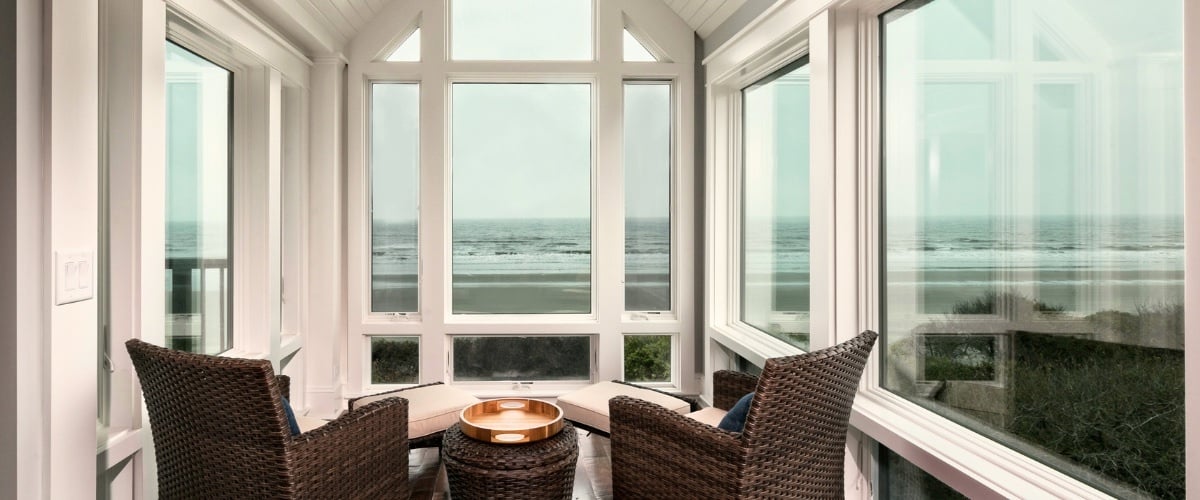
These are among the most refined private communities on the East Coast. World-class golf, miles of pristine beach, protected natural landscapes, and resort-level amenities define daily life here.
Homes on Kiawah Island and Seabrook Island are designed to coexist with a landscape of exceptional beauty and reflect an equally elevated standard of craftsmanship.
What to Know Before You Build
Land acquisition and construction costs are among the highest in the Charleston area, and for good reason. Architectural review boards enforce rigorous design standards that ensure long-term value and community cohesion. Environmental sensitivity and preservation requirements further shape planning and design.
Building here is a deliberate, detailed process that rewards patience and expertise.
Best Suited For
These private island communities are best suited for those seeking resort-style living woven into a natural setting. They appeal to buyers who prioritize outdoor living, privacy, and the kind of architectural integrity that holds value for generations.
Why Your Builder Should Come Before Your Lot
We say this to every client who comes to us having already purchased land: the earlier we are involved, the better the outcome.
A builder who understands the Charleston market, including its coastal regulations, historic overlay districts, and municipality-by-municipality differences in permitting, can help you evaluate a property before you’re committed to it.
We look at every site not just for what it is, but for what it can support: the home’s orientation, its relationship to the land, its elevation, its views, and whether the vision a client brings to us is actually achievable on that piece of ground.
That early involvement changes the trajectory of a project. It prevents expensive surprises and ensures that design and site decisions are made together.
Ready to Find the Right Location for Your Home?
Charleston offers more possibilities than almost any other market in the country. The question is never whether the right place exists here. It’s finding the one that’s right for you.
Cook Bonner Ebeling works with clients across Charleston and the surrounding Lowcountry to design and build custom homes from the ground up, beginning with the decision of where to build.
If you’re ready to begin that conversation, we’d be glad to hear from you. Reach out to our team now.
