One of the most exciting parts of the custom home building process is deciding on styling and details.
The materials you choose play a big part in elevating your home from cookie-cutter to bespoke masterpiece. But in Charleston, material selection goes beyond aesthetics. The coastal climate, salt air, humidity, and hurricane exposure mean that what looks beautiful also has to perform.
From flooring to fixtures to the exterior, every detail should be thoughtfully chosen with durability, high quality, and your personal style in mind. It’s important to find a builder who picks materials through the lens of what actually holds up here in the Lowcountry.
Let’s take a look at some of the elements you don’t want to miss when building your custom home in Charleston.
Defining Your Vision
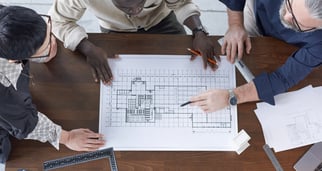
Building your dream home begins with a clear vision. Start with a concept: an overall feel that you want your home to embody, one that encapsulates your personal style and draws inspiration from Charleston’s unique blend of charm, history, and coastal beauty.
To further define your vision, you’ll need to keep three key elements in mind.
Identify Your Personal Style and Preferences
When taking on a project as big as building a custom home, you need to establish a strong foundation (pun intended) based on your ultimate needs and desires.
Consider the interior design aesthetics that resonate with you, whether it’s the timeless elegance of traditional Southern design, the sleek lines of contemporary coastal styles, or the warmth of relaxed, livable spaces. Think about what color palettes, textures, and overall atmospheres feel like home to you.
By honing in on your personal style, you lay the groundwork for a home that's not just architecturally stunning but also a true reflection of your tastes.
Consider Architectural Elements Unique to Charleston
Charleston has a rich history and architectural heritage with a distinctive charm that sets it apart from any other city in the country.
As you define your vision, take inspiration from the city’s unique architectural elements: the wrought-iron balconies, double piazzas, and intricate detailing that give the historic district its character.
Adapting these elements into your home design pays homage to the local aesthetic and integrates harmoniously with the surrounding Lowcountry landscape.
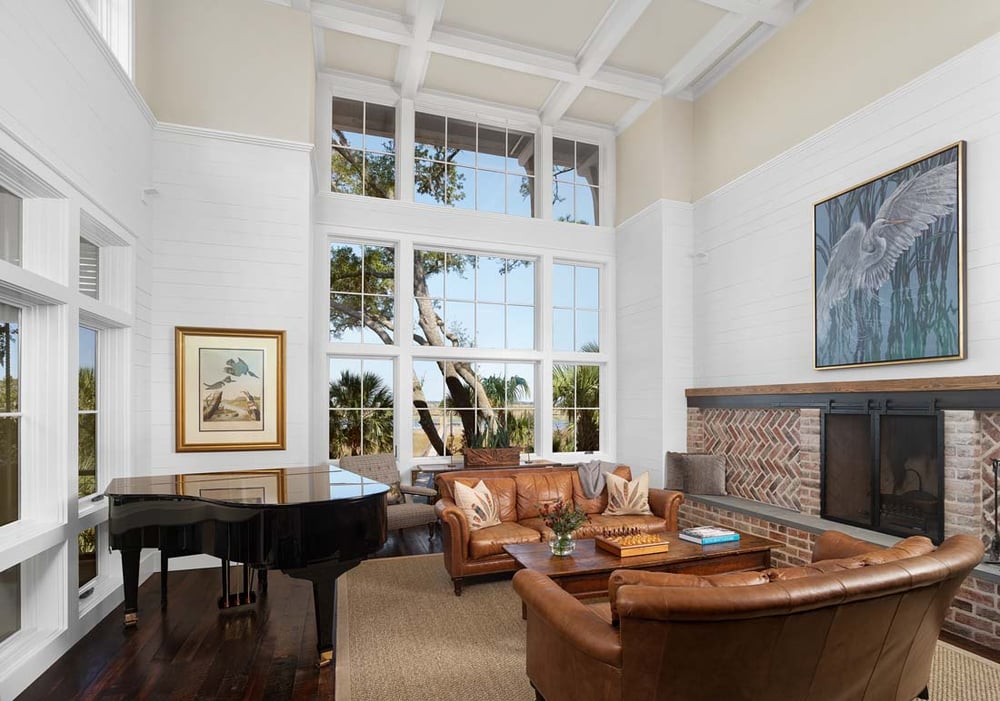
Build for the Lowcountry Climate, Not Just for Looks
This is the piece most out-of-state buyers don’t think about until it’s too late. Charleston’s coastal environment is hard on materials that may perform beautifully elsewhere.
Salt air accelerates corrosion in metals. High humidity and heat cycling cause certain woods and finishes to warp, crack, or degrade faster than expected. Homes in flood zones have specific elevation and material requirements that shape everything from your foundation to your exterior cladding.
Selecting high-quality materials enhances the aesthetics and also contributes to the longevity and value of your home, especially here, where the environment tests every decision you make.
Flooring Options for Lowcountry Homes
Flooring is one of the first things people notice when stepping into your home, so choosing materials that are both timeless and climate-appropriate adds a layer of luxury that holds up over time.
Exotic Woods
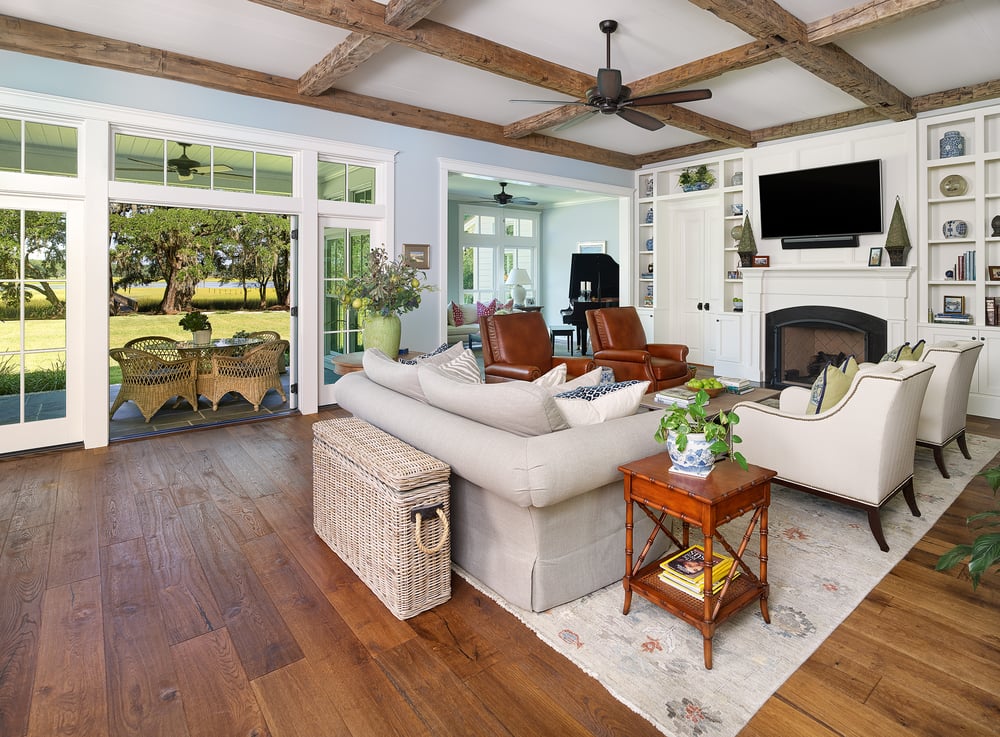
Hardwood floors are a fantastic flooring option that combines classical and modern styles. In the Lowcountry, however, not all hardwoods are created equal. High humidity and temperature swings can cause certain wood species to expand, contract, and warp over time.
Our favorites for Charleston homes include species with natural density and moisture resistance:
- Brazilian Walnut (one of the hardest and most dimensionally stable options available)
- Tigerwood
- Cypress (a Lowcountry native that has been used in coastal construction for centuries for good reason)
- Acacia
- Brazilian Cherry
Exotic hardwoods not only bring a unique visual appeal but are also exceptionally durable. Take it a step further by opting for custom finishes, hand-scraped textures, wide plank widths, or intricate inlays.
And if you love the look of wide-plank hardwood but want maximum humidity resistance, engineered hardwood with a thick veneer layer checks all the boxes.
Marble, Quartz, and Granite
Marble, quartz, and granite have long been synonymous with luxury and sophistication. Beyond just aesthetics, these materials offer cooling properties that make them an ideal choice for warmer climates like Charleston, where summers are long, and interiors can stay warm even with air conditioning running.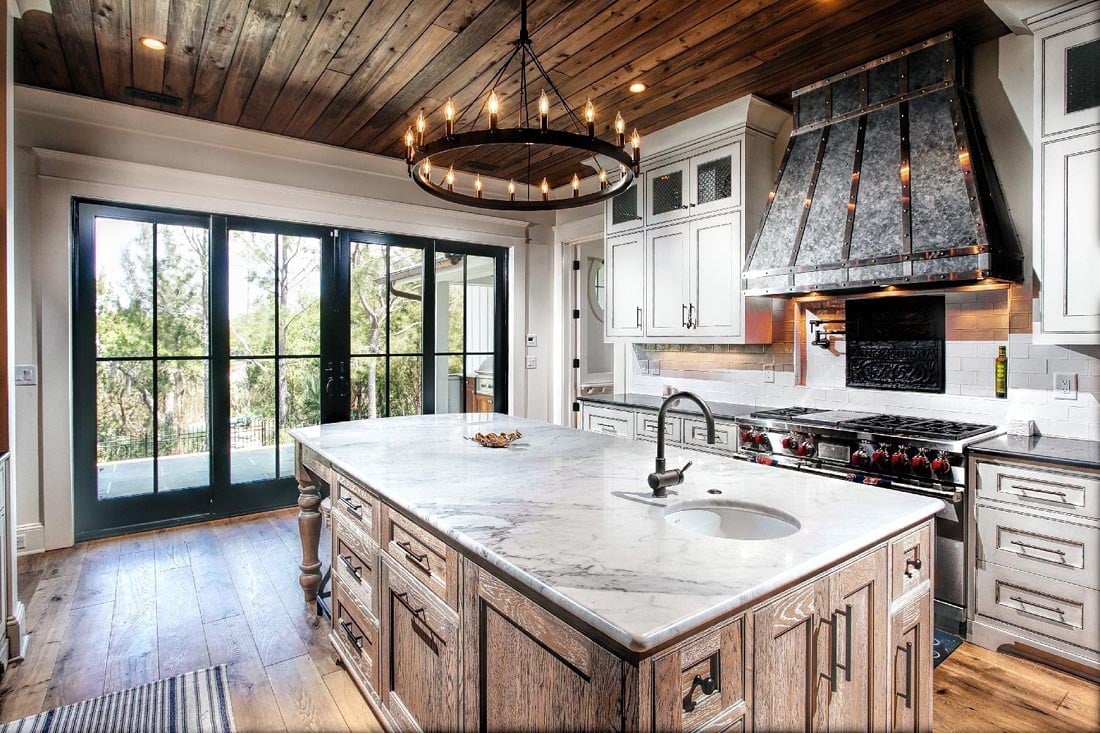
Quartz is one of the more popular options in the custom homes we build. It’s perceived as higher-end than granite, typically more affordable than marble, and crucially, it’s non-porous, which means it resists moisture and staining in ways that matter in a humid coastal environment.
Granite, while more commonplace, is known for its durability and unique patterns. The most striking granite stones come in red, blue, or purple. The rarest? Van Gogh granite, sourced from Brazil, is absolutely breathtaking in the right space.
Bathroom Elements
A true luxury home ensures that its appeal extends seamlessly to the spaces you use every day. Bathrooms are a perfect canvas for the intricate attention to detail that makes a custom home truly stand out.
Freestanding Bathtubs
A true luxury home ensures that its appeal extends seamlessly to the spaces you use every day. Bathrooms are a perfect canvas for the intricate attention to detail that makes a custom home truly stand out.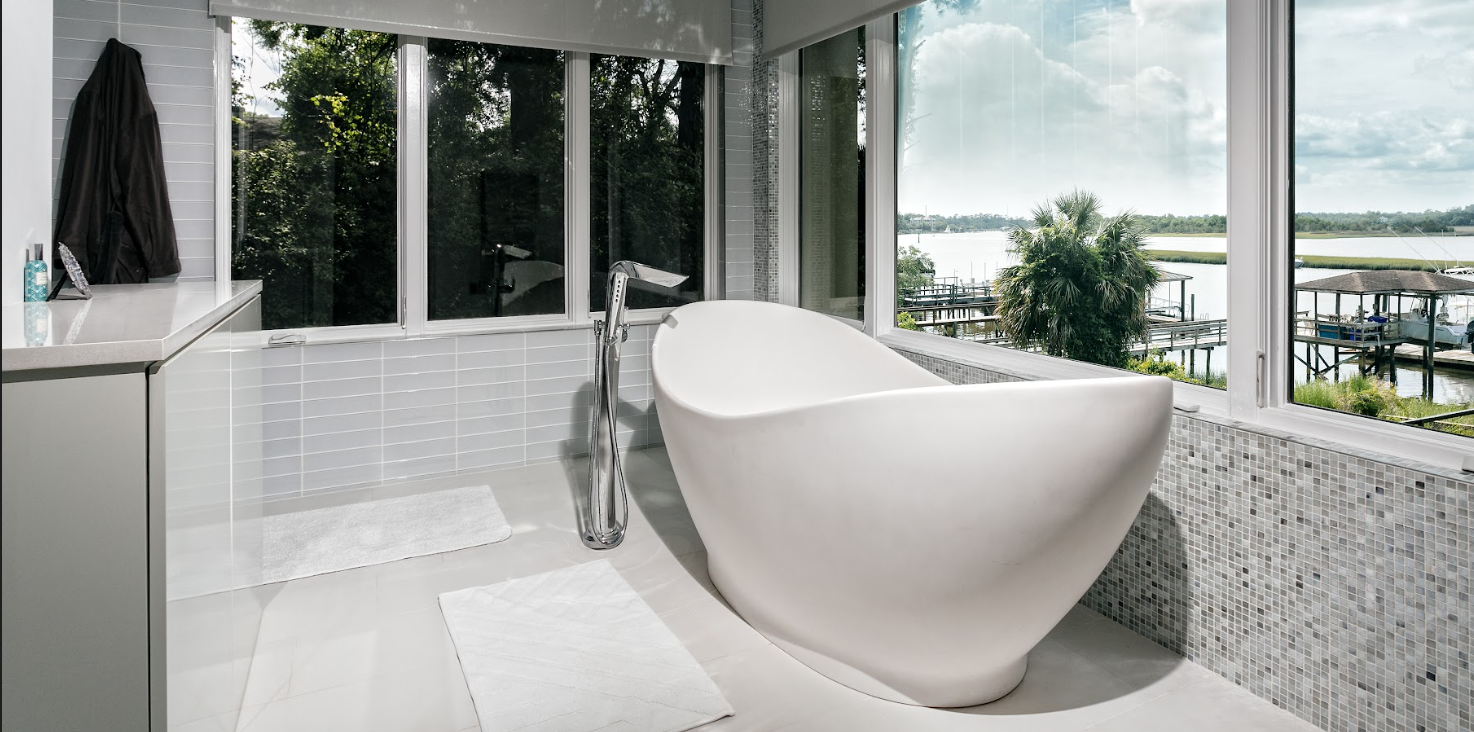
Luxurious Shower Systems or Steam Rooms
For a genuine spa feel, add a custom shower system, steam room, or indoor/outdoor sauna to your home design plan. In Charleston’s climate, a well-ventilated steam shower with properly sealed tile and grout is worth the investment in both materials and installation.
Designer Faucets and Fixtures
Often forged rather than plated, high-end faucets and fixtures add a beautifully striking visual appeal to your bathroom and kitchen alike.
This is also where coastal climate awareness really matters: standard chrome and nickel finishes can show corrosion faster in salt-air environments. Brushed brass, oil-rubbed bronze, and PVD-coated finishes tend to hold up significantly better in Lowcountry homes.
Heated Flooring
Perfect for those cooler Charleston mornings, heated flooring is an incredible detail that adds comfort and an element of grandeur to any bathroom. Radiant heat beneath stone or tile is a particularly well-suited pairing in coastal homes where these materials can feel cool underfoot.
The Charleston Touch: Elevating Your Home's Exterior to High-End Luxury
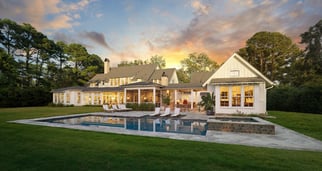
Infusing your custom home with the distinctive charm of Charleston’s style means combining the city’s rich architectural history with the practical realities of Lowcountry living.
Here are essential tips for incorporating Charleston style into the exterior of your home while building for the climate.
Double Piazzas
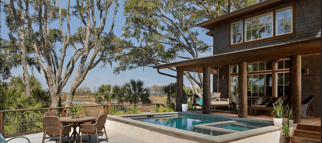
Draw inspiration from classic Charleston homes by incorporating double piazzas or verandas. These elevated, covered spaces add a touch of Southern elegance and serve a practical purpose: they shade a home’s interior from direct sun, reduce heat gain, and create ideal outdoor living areas for enjoying the Lowcountry evenings.
For coastal properties, treated wood decking or composite materials with proper drainage detailing are worth discussing with your builder.
Wrought-Iron Details
Wrought-iron railings, gates, and accents are a hallmark of Charleston’s historic architecture and add a refined, timeless touch to your home’s facade.
In a salt-air environment, proper sealing and coating of iron elements is essential to maintaining their appearance. Powder-coated or galvanized finishes extend the life of these details significantly in coastal conditions.
Exterior Cladding and Hurricane Considerations
This is a conversation that doesn’t come up enough in home material guides, but it matters significantly in Charleston. Homes in the Lowcountry need to meet wind-load requirements, and in many areas, flood-zone building codes affect everything from your foundation height to your exterior material choices.
Fiber cement siding, impact-rated windows, and properly anchored roofing systems are what separate a home that holds its value from one that requires costly repairs after a severe storm.
Our team navigates these requirements on every project we build, and we’re happy to walk you through what applies to your specific site.
Historical Color Palettes
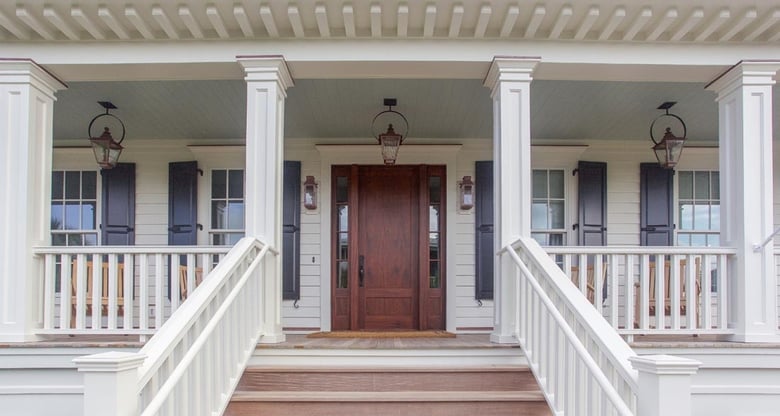
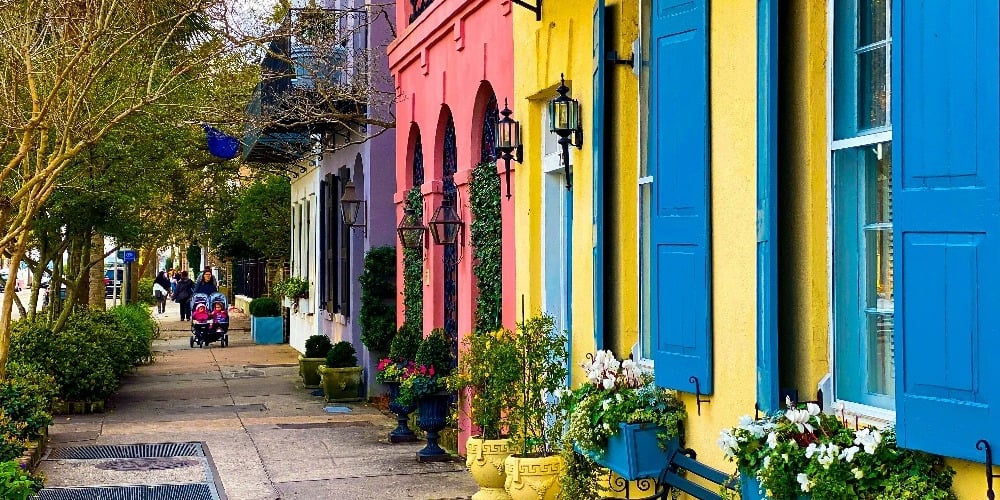
Choose exterior colors that reflect the palettes so prevalent in Charleston. Soft pastels such as pale blues, greens, and pinks, like those on the famous Rainbow Row, add a light, welcoming feel to the exterior of your home and connect it visually to the character of the city.
Our Recommendation: Build for This Place
One of the most common things we hear from clients who’ve built elsewhere and relocated to Charleston is that they wish they’d known more about how the Lowcountry climate affects material decisions.
The good news is that building with those considerations in mind from the start is both more cost-effective and more satisfying than retrofitting later.
Our recommendation is to choose materials that you love the look of and that are proven performers in coastal, high-humidity environments. When those two things overlap (and they often do), you get a home that’s just as beautiful ten years in as it is on move-in day.
Our team has spent decades building custom homes across the Charleston area. We know what holds up, what doesn’t, and how to help you make decisions you’ll be proud of for the long term. Explore our portfolio of completed homes.
Frequently Asked Questions About High-End Home Materials in Charleston, SC
What flooring holds up best in Charleston’s humidity?
Dense, moisture-resistant hardwood species like Brazilian Walnut and Cypress tend to perform best in the Lowcountry’s high-humidity environment. Engineered hardwood with a thick veneer layer is another strong option for areas with significant temperature swings.
Quartz and porcelain tile are also excellent choices for their non-porous, moisture-resistant properties.
What are the best exterior finishes for a coastal home in Charleston?
In Charleston’s salt-air environment, finishes that resist corrosion are essential. For metal elements like railings and fixtures, powder-coated, galvanized, or PVD-coated finishes significantly outlast standard chrome or nickel.
For exterior cladding, fiber cement is a popular choice among luxury builders in the Lowcountry for its durability, low maintenance, and ability to hold paint well in humid conditions.
Do homes in Charleston need to meet specific hurricane or flood-zone requirements?
Yes. Depending on the location of your home site, you may be subject to wind-load requirements, flood-zone elevation rules, and impact-rated window and door specifications.
These requirements shape material and construction decisions from the foundation up. An experienced custom home builder in Charleston will navigate these requirements as part of the design and permitting process.
What high-end kitchen and bathroom finishes work best in the Lowcountry climate?
For fixtures and hardware, brushed brass, oil-rubbed bronze, and PVD-coated finishes hold up significantly better than chrome in salt-air environments. When it comes to countertops, quartz is a top choice for its non-porous surface and moisture resistance.
For cabinetry, solid wood with a high-quality finish (paired with proper kitchen ventilation) is key to preventing warping over time.
How do I choose between marble, quartz, and granite for a Lowcountry home?
All three are excellent choices for luxury interiors, but they have different performance profiles.
Quartz is non-porous and requires the least maintenance, making it ideal for kitchens and bathrooms in humid environments. Marble is stunning and classic, but it requires sealing and more careful upkeep in coastal conditions. Granite falls in the middle: durable and unique, but also porous and in need of periodic sealing.
The team at Cook Bonner Ebeling can walk you through which option makes the most sense for each space in your home.
Crafting Timeless Luxury in Your Custom Home
Selecting high-end materials and designs for your custom home in Charleston requires a thoughtful approach.
Don’t rush into the decision-making stage. Make sure you understand what you want to experience day-to-day, and build from there, layering in the luxury elements you love alongside the Lowcountry-specific considerations that will protect your investment for decades.
Need help deciding on finishes, textures, or architectural designs? Reach out to our team. We have decades of experience building and designing custom homes in Charleston and the surrounding Lowcountry and can guide you through every decision with confidence.
Remember: don’t be afraid to dream big. It’s your dream home. You bring the vision, and we’ll make it happen.